
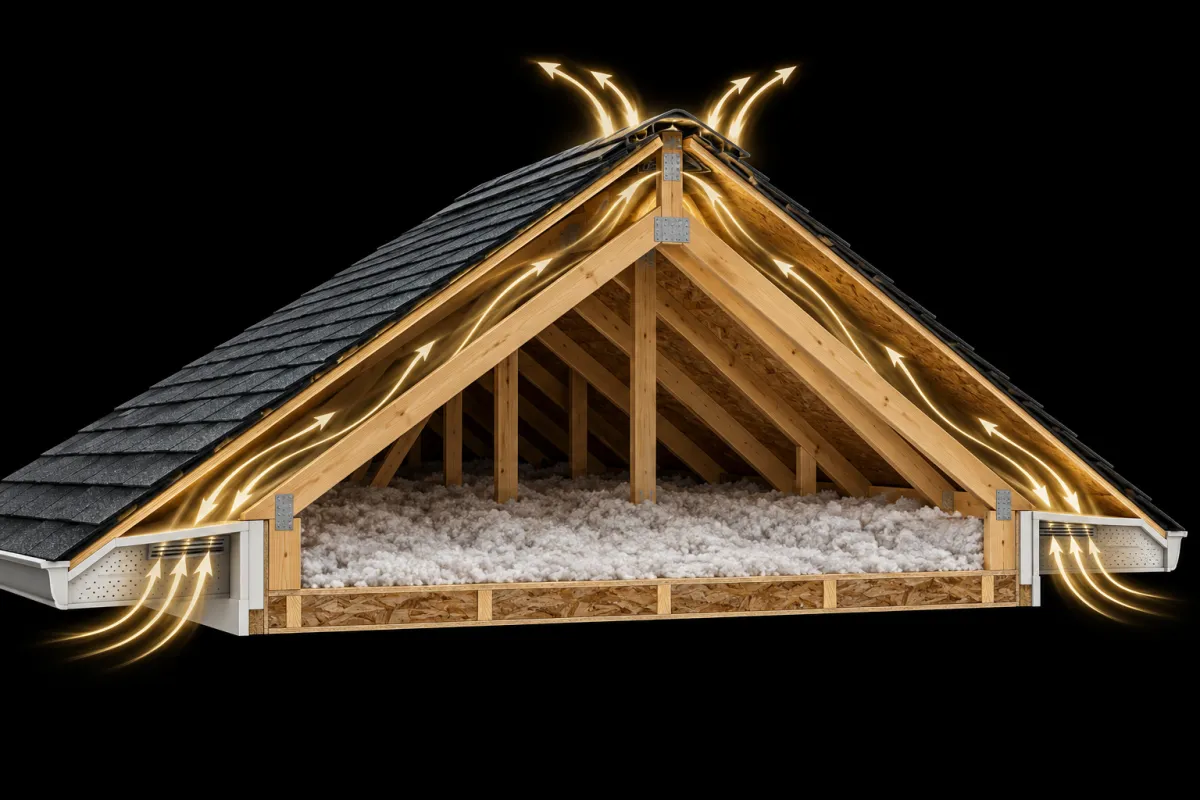
Ventilation is the part of a roof most homeowners never see. It still has a big effect on how long shingles last and how the house handles Idaho's summer heat and winter cold.
How attic ventilation works
Most vented attics pull outside air in low at the soffits (intake) and let it out high near the ridge (exhaust). That steady flow carries heat and moisture out of the attic. Both halves matter. A ridge vent with blocked soffits won't move much air.
What poor ventilation can cause
- Summer heat buildup. A hot attic can bake shingles from underneath and make the rooms below harder to cool.
- Winter moisture. Warm, damp air from the house can condense on cold roof decking and lead to mold or rot.
- Ice dams. A warm roof deck melts snow unevenly, which can lead to ice buildup at the eaves.
- Warranty issues. Some shingle manufacturers list ventilation requirements in their warranty terms. Check the terms for your product.
Signs your attic may not be venting well
- Frost on the underside of the roof deck in winter
- Dark staining or a musty smell in the attic
- Insulation pushed up against the soffits, blocking airflow
- Upstairs rooms that stay much hotter than the rest of the house
- Heavy ice at the eaves when neighbors' roofs look clear
How much ventilation is enough?
Building codes set minimum ventilation based on attic floor area, and the right design depends on the roof shape, the vents already in place, and how the attic is insulated. Mixing different exhaust types, like a ridge vent plus powered fans, can sometimes work against itself. This is worth having a roofer check rather than guessing.
Best time to fix it
A roof replacement is the easiest time to correct ventilation, because the ridge and roof edges are already open. If you're getting a replacement estimate, ask how the plan handles intake, exhaust, and any existing vents.
Have your attic ventilation checked
Request a roof inspection that includes a look at ventilation.
Request an Inspection