
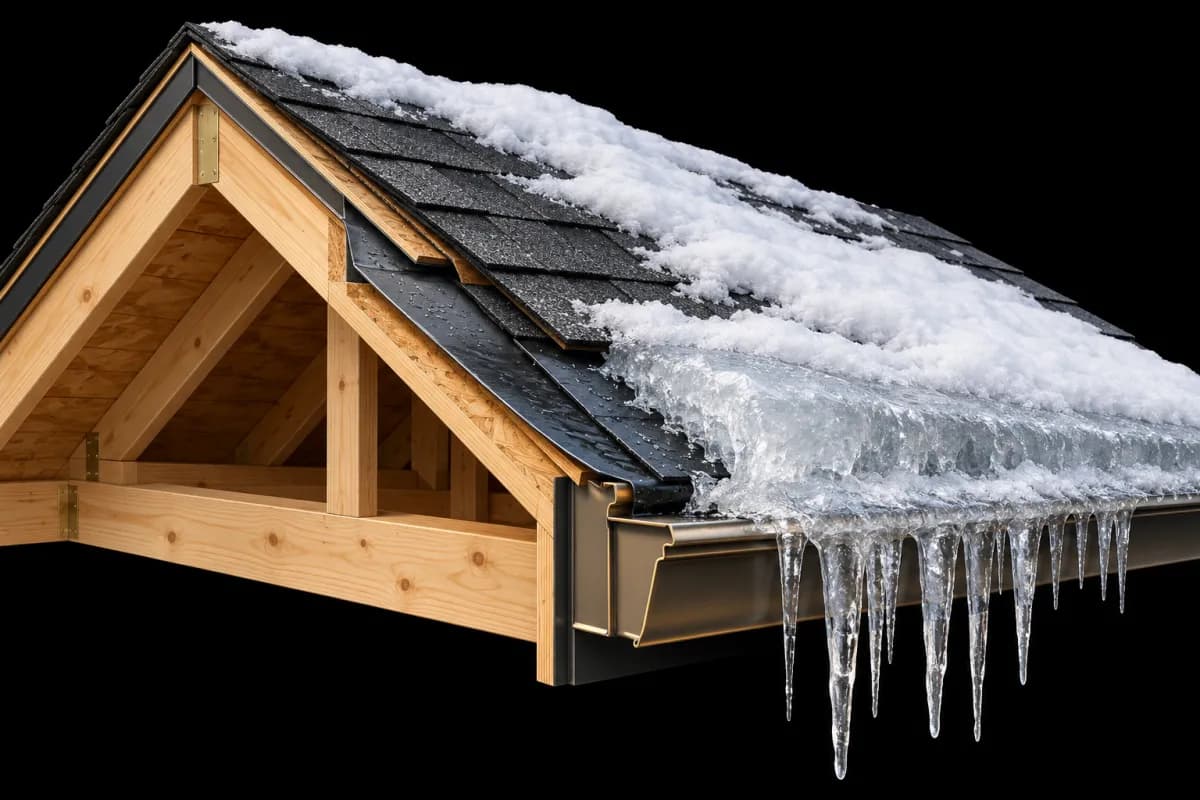
Fall is the easiest time to fix small roof problems. Once snow and freezing nights show up, repairs get harder to schedule and small issues can turn into leaks. Here's what to check before winter.
Fall roof checklist
- Clean the gutters. Leaves and debris hold water, and that water can freeze and back up under the roof edge.
- Check downspouts. Make sure water drains away from the foundation, not onto a walkway where it'll freeze.
- Look for missing or lifted shingles. Do it from the ground with binoculars. Don't climb on the roof.
- Look at flashing and vent boots. Cracked rubber boots around pipes are a common leak source.
- Trim overhanging branches. Snow load and wind can bring them down onto the roof.
How ice dams form
An ice dam starts when heat from the house warms the roof and melts snow. The water runs down to the colder eaves and refreezes. Over time that ridge of ice traps more meltwater behind it, and the water can work its way under the shingles.
Signs to watch for include thick ice along the roof edge, large icicles, and water stains on ceilings or walls near exterior walls.
What helps prevent ice dams
- Attic insulation. Keeping heat in the living space keeps the roof deck colder and more even.
- Attic ventilation. Good airflow from soffit to ridge helps keep the roof deck close to outside temperature. See our attic ventilation guide.
- Air sealing. Gaps around attic hatches, lights, and pipes let warm air into the attic.
- Ice barrier at the eaves. Many building codes in cold climates require a self-adhering ice barrier along the roof edge. If you're replacing your roof, ask what your local code requires and what your roofer plans to install.
If you already have an ice dam
Don't chip at the ice with a hammer or shovel. It's easy to damage the shingles and gutters, and working on an icy roof is dangerous. A roof rake used from the ground can pull snow off the lower part of the roof. If water is getting inside, contain it, take photos, and call a roofer.